
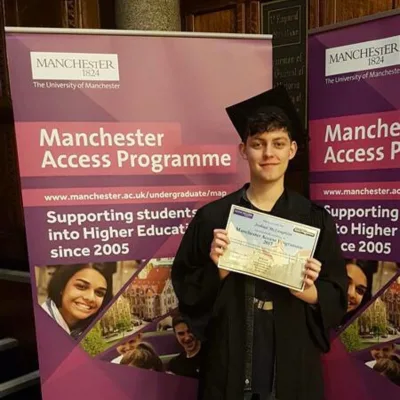
In this blog post, he shares his story from the Manchester Access Programme, what you need to know before applying, and how to check if you are eligible for a contextual offer.
To set the scene, most, if not all, universities will commit to Widening Participation and Equality standards. They will want to recruit students from all backgrounds, regardless of education or social background, as it evens the playing field and gives students who might not otherwise have had the chance to consider university as an option. University access schemes have therefore been invented to target and support students from underrepresented backgrounds in higher education.
I personally graduated from the University of Manchester’s ‘Manchester Access Programme,’ but there are similar schemes offered by other universities within the UK, such as Newcastle, UCL, LSE, Sussex, Bristol, and others. They all have different names and support offerings, so it is best to not make any sweeping generalisations and research further if they interest you.
I found out and applied for the 'Manchester Access Programme' (also known as MAP) in 2016 and started it in 2017 alongside completing my AS and A-Levels. It's a scheme designed to help local Year 12 students gain a place at a research-intensive university in the UK, and helps to prepare you for life as a university student and support your UCAS applications – but more on this later.
To be eligible, I had to meet all the essential criteria, and at least one priority criteria (these will vary depending on the programme or scheme you’re looking at):
- Live in Greater Manchester or study at a school/college in Greater Manchester
- Attend a state school or college, and be studying a Level 3 qualification (such as A-Levels or BTEC)
- Be a year 12 student
- Have at least 5 GCSEs at grade 6 or above, or equivalent
- Have never attended a private school or paid for your education
- Neither parent has studied at University before
- Be a home-registered student or have 'settled status' by the time you start a university degree
The priority criteria included:
- Living in a neighbourhood with a low progression rate into higher education, or an area of financial, social, or economic deprivation
- Receive free school meals at college or the 16-19 bursary
- Received pupil premium or free school meals at secondary school
- Attended a high school where the average KS4 performance is lower than the national average
- Attended a school or college where the KS5 performance is lower than the national average
- A young career
- Estranged student
- Sanctuary seeker
- Have a disability and be in receipt of Personal Independence Payment or Disability Living Allowance
- Identify as a Gypsy, Roma, and Traveller, or Black African, Black African Caribbean, mixed-race Black African, or mixed-race Black African Caribbean
- Be care experienced (public care, foster care, semi-independent living, etc.)
They also took the following extenuating circumstances into account:
- Living independently from family
- Experiencing significant family issues
- Have a disability or health condition that may have affected your education
I applied to MAP in December 2016 and found out I'd been selected in February 2017. In March, there was the Launch event - where all the applicants gathered in a massive lecture hall on campus to find out about the programme, university courses, admissions, and entry requirements.
This was the first time I'd ever stepped foot inside a university, so I was excited but also nervous. Due to my background and upbringing, I maintained the mindset that I had to grab and fully embrace every opportunity available to me, and that’s exactly what I did.
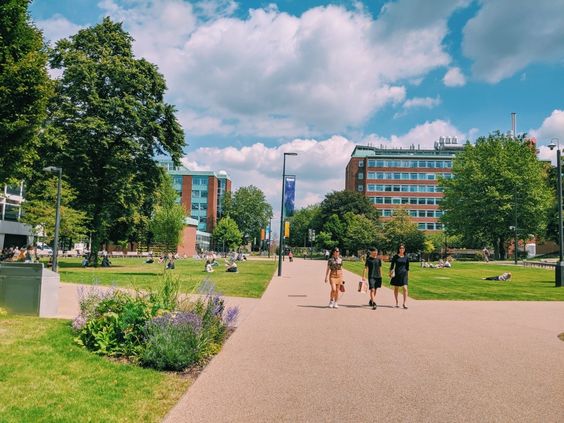
From April to May, there were different 'research and referencing skills workshops' we could attend to build up credits to graduate from the programme. You needed over 100 credits in total, with each event or task given between 5-20. Without realising at the time, these introductory sessions were useful touchpoints to remember when later starting university and completing assignments.
I then met with my designated Academic Tutor, a Professor from the Drama department as I'd applied for the 'General Strand' and was interested in studying Drama, to speak about my academic assignment. This was one I had to ideate myself and was the toughest part of the programme – it was 1,500 words and needed to be Harvard Referenced and use multiple ‘peer-reviewed’ sources.
It was my first taste of university-level writing and referencing. I submitted it 8 minutes before midnight on the final day. Thankfully, my personal circumstances and timekeeping skills have come a long way since then. I worked on this assignment over the summer before submitting it in August after my AS Level exams.
As it turns out, this comparative essay on the devising theatre practices of theatre practitioners Frantic Assembly and Punchdrunk, achieved a ‘Distinction’ grade. I, and the people around me, never really viewed myself as an ‘academic’ type. I always believed my grades to be rather average and much preferred hands-on and practical learning.
This result came as quite a surprise and helped to boost my confidence in my own abilities, which possibly helped steer me to achieve a first-class university degree some years later.
In July, the University Life module was held where all the applicants got to meet up and attend workshops and teambuilding exercises together, with the options of attending a 'University Ball' and staying in the student dorms overnight.
It was fun and one of the more memorable highlights of the programme. I still follow some of the people I met there on Instagram to this day. It’s always nice to see, like myself, how far they have come and what they are getting up to now. It’s good to keep in touch with people like this too, as you never know when your paths may cross again.
After all the modules and submitting your academic assignment, building up enough credits, everyone who successfully completed MAP could submit a Decision Manchester application form to the University of Manchester.
This meant that we could find out which course we'd receive an interview or offer for at Manchester, before then submitting our official UCAS application. It is also here where I was offered a contextual offer 2 grades lower than what typical applicants would've received.
The Student Ambassadors assisting with running the programme also gave useful tips on how to improve your application, should you decide to go somewhere else, or study something else entirely, instead. Speaking of which, by this point, I'd realised that while I loved Drama, I wasn't convinced I wanted it to be my entire career.
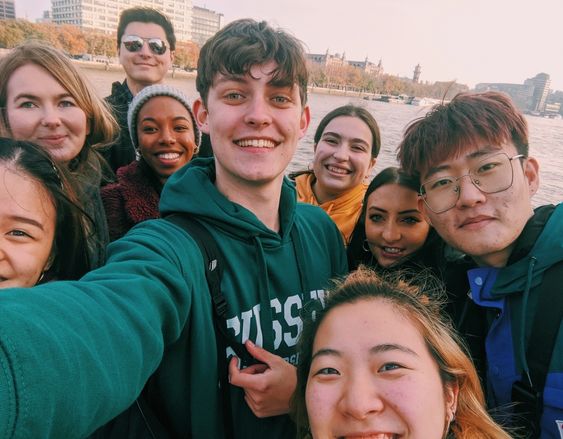
So, after receiving my Decision Manchester offer, I made applications for Media and Communications courses elsewhere, ultimately settling on the University of Sussex.
While Manchester was a prestigious Russell Group university, I also found it important to factor in the university culture, location, student societies, alumni, and teaching styles. Manchester didn’t offer any media-related courses, and Sussex felt like a much better fit for my personality.
This decision turned out to be a fantastic one. But everyone is different, as is everyone’s reasons for wanting to attend university in the first place – so it’s important to keep these things in mind.
So, did I go to the University of Manchester for my undergraduate student? No. Did I go to university elsewhere? Yes. But do I regret spending all that time on the Manchester Access Programme? Actually, no. And here’s why.
I gained a lot of insight into university life, the standard of education, and the dedication required, and got to meet and speak to so many people I otherwise would never have met. It was a real eye-opening experience, and if it weren't for it, I might've decided to study Drama at Manchester or elsewhere anyway and might've really loved it, or hated it – I guess we’ll never know.
It changed the trajectory of my life massively. Most importantly, this experience gave me the extra insight to help me make the all-important decision for myself. I'm really grateful for that.
Despite being a First-Generation Scholar, the first in my family to attend and graduate from university, I also believe the experience gave me an extra step up on students starting their first year at the same time as me. I already knew what Harvard referencing was, could navigate my way around a library and academic journals to find readings, and had already begun to develop my academic writing and tone of voice.
I would recommend looking into programmes like this from universities in your area, regardless of if you are interested in applying for university or not, as it gives you an important taster of the options that truly are available to you, regardless of your background.
Who knows, you might walk away from it never wanting to step foot inside a university again, and take up an apprenticeship instead? I believe there are no ‘wrong’ career decisions or routes, just experiences that serve as redirections to where we truly belong and can make our strongest impact.
To find out more about the different types of careers and career routes available to you, as well as their entry requirements, search the GetMyFirstJob website by Industry Sectors, Job Categories, Employers, and more.